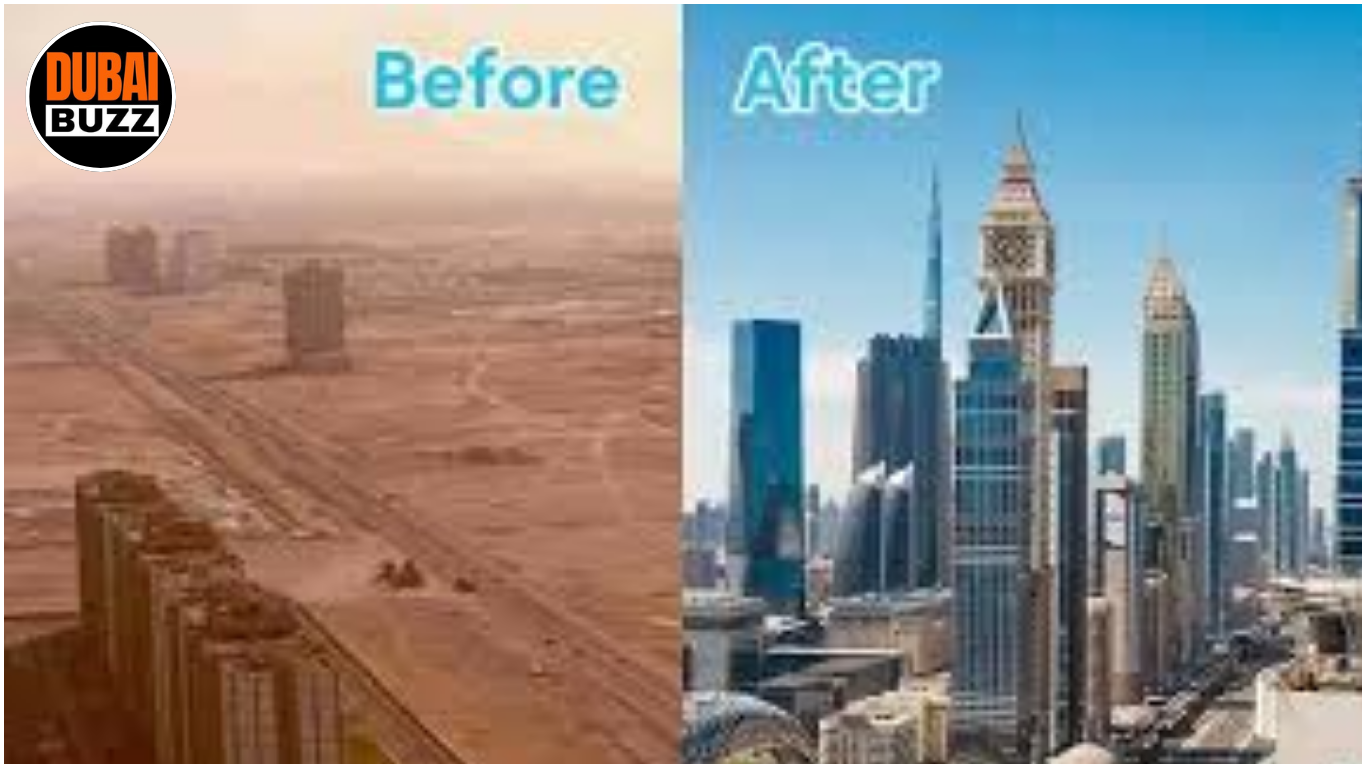
DUBAI: Discover the incredible journey of how Dubai became one of the richest cities in the world. From pearl diving and oil discovery to becoming a global hub for trade, tourism, and real estate.
The story of Dubai is often mistaken for a simple “rags-to-riches” oil tale. While oil played a role, the truth is far more strategic. Dubai’s transformation from a quiet fishing village into a shimmering global metropolis is the result of visionary leadership, aggressive economic diversification, and a “build it and they will come” philosophy.
Here is the breakdown of how Dubai became so rich.
1. The Pre-Oil Era: A Hub for Trade and Pearls
Long before the first drop of oil was found, Dubai was already a commercial hub. Under the leadership of the Al Maktoum family in the late 19th and early 20th centuries, Dubai was declared a free port with no taxes for foreign merchants.
- Pearl Diving: Until the 1930s, the economy relied heavily on the pearling industry.
- The Re-export Center: When the pearl market collapsed due to the invention of cultured pearls, Dubai pivoted to “re-exporting”—importing goods from one country and exporting them to another, particularly to India and Iran.
2. The Oil Discovery: The Catalyst, Not the Source
Oil was discovered in Dubai in 1966. While it provided the initial capital needed to build the city, Dubai’s oil reserves were never as vast as those in Abu Dhabi or Saudi Arabia.
- Strategic Reinvestment: Instead of simply spending the oil wealth, the late Sheikh Rashid bin Saeed Al Maktoum used the revenue to build massive infrastructure, including the Jebel Ali Port (now the world’s largest man-made harbor) and Dubai International Airport.
- The 5% Factor: Today, oil contributes less than 5% of Dubai’s GDP—a stark contrast to its neighbors.
3. Diversification: Trade, Tourism, and Logistics
Realizing that oil would eventually run out, Dubai’s leadership focused on making the city a global “service station.”
- Jebel Ali Free Zone (JAFZA): By creating “Free Zones,” Dubai allowed foreign companies to own 100% of their businesses with zero taxes. This attracted thousands of global corporations.
- Aviation Excellence: The creation of Emirates Airline turned Dubai into a bridge between the East and the West. Today, over 80 million people pass through Dubai International Airport annually.
- Luxury Tourism: Projects like the Burj Al Arab and the Palm Jumeirah weren’t just vanity projects; they were marketing tools to put Dubai on the map as a luxury destination.
4. Real Estate and the “Burj” Factor
In 2002, Dubai changed the law to allow foreigners to own “freehold” property. This triggered an unprecedented real estate boom. By building icons like the Burj Khalifa (the world’s tallest building), Dubai proved it could achieve the impossible, attracting investors from every corner of the globe.
5. The Modern Era: Technology and Finance
Today, Dubai is a leader in the Digital Economy. With initiatives like the Dubai International Financial Centre (DIFC) and the city’s push toward becoming a hub for AI, Blockchain, and Crypto, Dubai has secured its place as a top-tier global financial center alongside London, New York, and Hong Kong.
Conclusion
Dubai’s wealth isn’t just about what was found in the ground; it’s about what was built on top of it. Through tax-free incentives, world-class safety, and a relentless drive for innovation, Dubai has created an ecosystem where capital and talent feel at home.
#DubaiHistory #DubaiEconomy #HowDubaiGotRich #VisitDubai #DubaiBusiness #VisionaryLeadership #BurjKhalifa #MiddleEastEconomy #TravelDubai #Entrepreneurship
Would you like me to create an infographic-style summary of Dubai’s GDP sectors or find the latest statistics on Dubai’s 2026 economic growth projections?