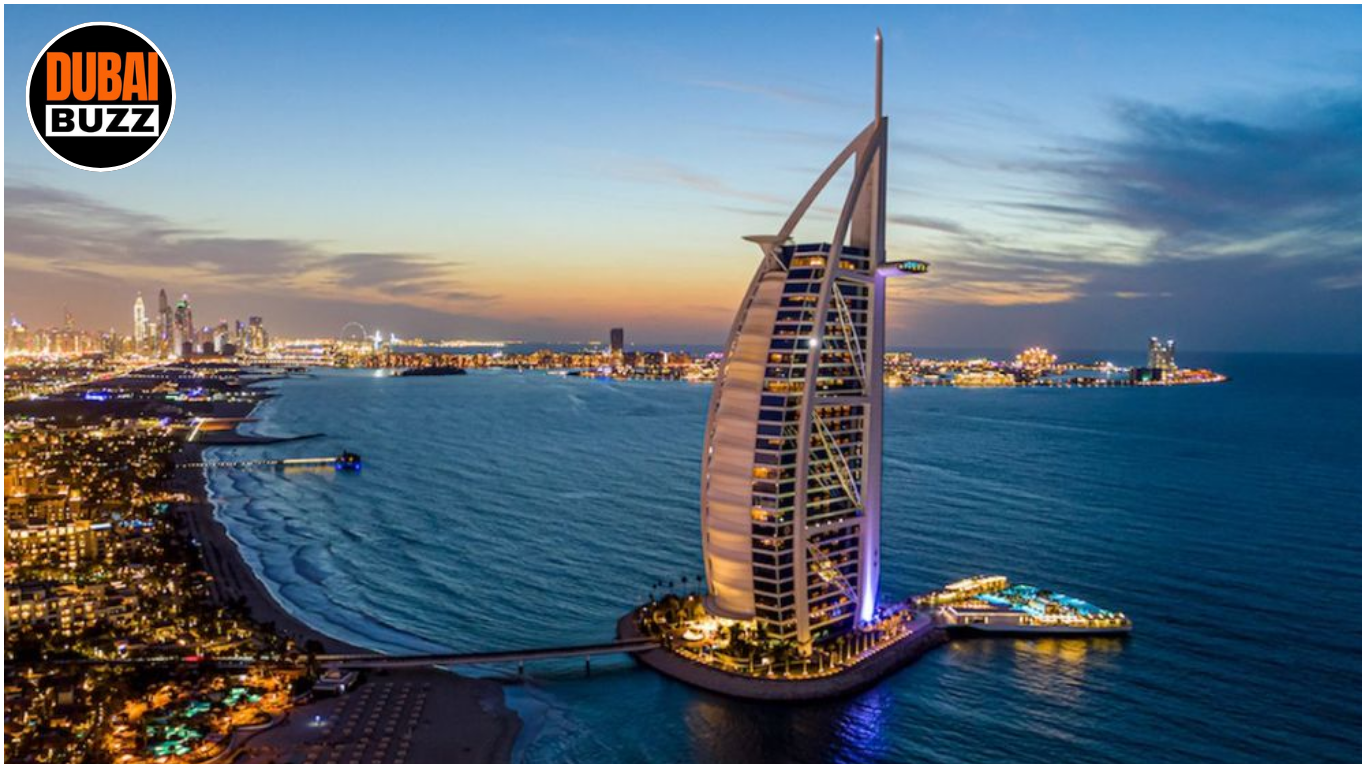
DUBAI: Step inside the Burj Al Arab, Dubai’s sail-shaped masterpiece. Discover the truth behind its “7-star” status, the opulence of its gold-leaf interiors, and how you can experience its luxury in 2026.
The Burj Al Arab Jumeirah is not just a hotel; it is the original symbol of Dubai’s transition from a desert outpost to a global capital of wealth. Architecturally designed to resemble the billowing sail of a traditional Arabian dhow, it sits on its own man-made island, connected to the mainland by a private bridge.
While the “7-star” rating is technically a myth (the official rating system only goes up to 5), the term was coined by a journalist who felt that 5 stars simply couldn’t describe the level of service and opulence found within its walls.
1. The Pinnacle of Opulence: Gold, Silk, and Marble
The interior of the Burj Al Arab is a masterclass in maximalism.
- 24-Karat Gold Leaf: Approximately 1,790 square meters of 24-karat gold leaf adorn the interiors, from the elevator doors to the pillars in the lobby.
- Statutario Marble: The hotel uses the same rare marble that Michelangelo used for his sculptures.
- The Atrium: At 180 meters high, it is one of the tallest atriums in the world, featuring a vibrant color palette that represents the earth, air, fire, and water.
2. The Suite Life: No “Standard” Rooms
You won’t find a standard hotel room here. The Burj Al Arab consists entirely of 202 duplex suites.
- Personal Butlers: Every floor has a dedicated team of butlers available 24/7 to unpack your bags, draw your bath, and cater to your every whim.
- The Royal Suite: Often ranked among the most expensive hotel rooms globally, it features a private cinema, a rotating canopy bed, and a library.
3. The Terrace: Luxury on the Water
Added in recent years, The Terrace is a 10,000-square-meter outdoor luxury deck that fans out into the Arabian Gulf.
- It features two stunning infinity pools, private air-conditioned cabanas, and a beach area with white sand imported from Saudi Arabia (chosen because it doesn’t blow away in the wind).
4. How to Visit (Without Staying the Night)
For years, the Burj Al Arab was closed to non-guests. In 2026, there are three primary ways to experience it:
- “Inside Burj Al Arab” Tour: A 90-minute guided tour that takes you into the Royal Suite and through the history of the building.
- Afternoon Tea at Sahn Eddar: A world-famous multi-course tea service in the heart of the atrium.
- Dining at Al Muntaha: Located 200 meters above sea level, this Michelin-starred restaurant offers French and Italian cuisine with floor-to-ceiling views of the coastline.
Conclusion
The Burj Al Arab remains the gold standard of hospitality. Even as newer, taller, and more modern hotels rise in Dubai, the “Sail of the City” maintains an aura of exclusivity and grandiosity that is unmatched. It is a monument to the idea that in Dubai, “luxury” has no upper limit.
#BurjAlArab #DubaiLuxury #7StarHotel #Jumeirah #VisitDubai #InsideBurjAlArab #DubaiArchitecture #LuxuryTravel2026 #DubaiIcons #StayDifferent
Next Step for You
Would you like me to find the current price for the “Inside Burj Al Arab” tour or help you compare the Afternoon Tea menus between the Burj Al Arab and the Burj Khalifa?